
Why nebulae shine
Emission nebulae glow when ultraviolet photons from hot young stars ionise hydrogen and other atoms. As electrons recombine or move between energy levels, they emit light at characteristic wavelengths. Hydrogen often produces red emission, while oxygen, sulfur and nitrogen contribute other colours in carefully processed images.
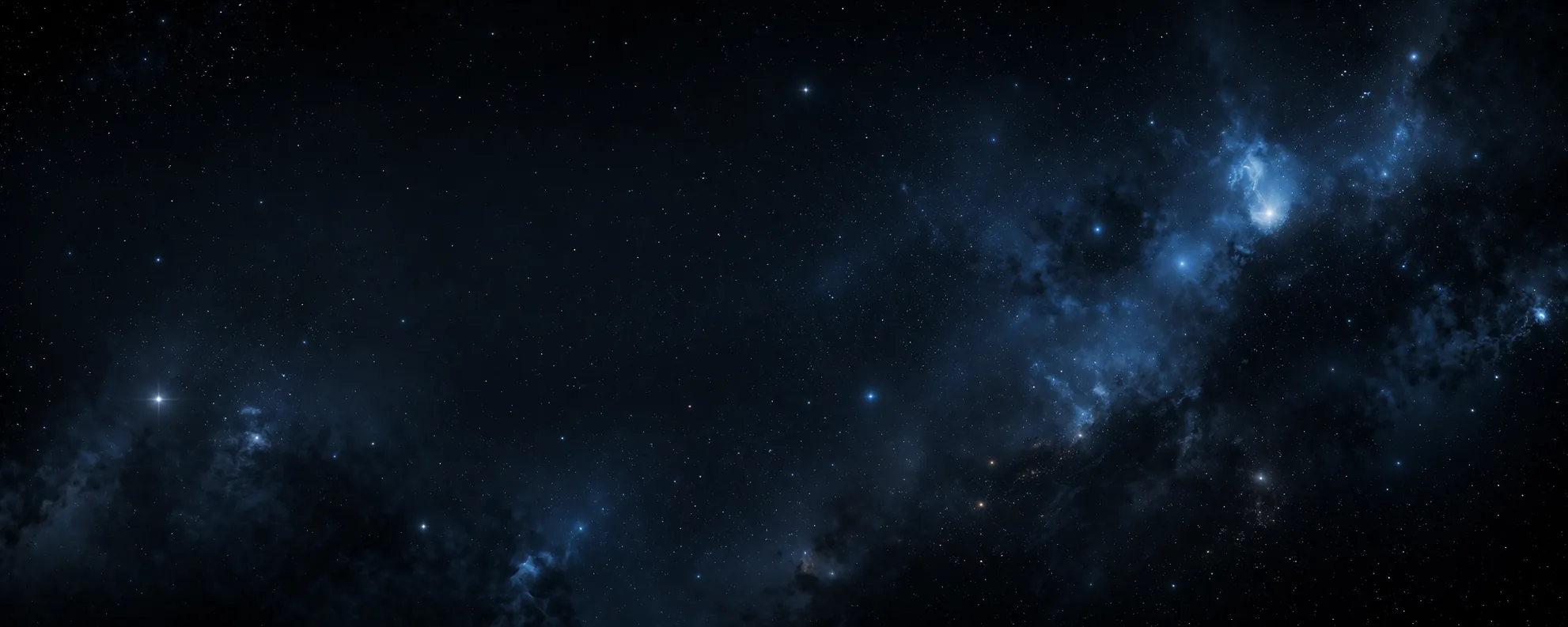
Reflection nebulae do not generate most of their visible light. Dust grains scatter the light of nearby stars, usually producing a blue appearance because shorter wavelengths scatter more efficiently. The same dust can make a star-forming region look both bright and shadowed.
Dark clouds and stellar birth
Dark nebulae contain cold, dense dust that absorbs or blocks the light behind them. Infrared and radio telescopes can see through this material and detect molecules, collapsing cores and very young stars. A dark silhouette can therefore be a sign of active formation rather than emptiness.
Molecular clouds fragment as gravity overcomes pressure and turbulence. The densest fragments form protostars and disks. Jets, winds and radiation then reshape the cloud, sometimes compressing nearby gas and sometimes dispersing the material needed for new stars.
Planetary nebulae
A planetary nebula has nothing to do with planets. It is the expanding envelope of a star that was once similar to the Sun. After the star exhausts its nuclear fuel, it sheds its outer layers and leaves behind a hot white dwarf.
The ultraviolet light from the white dwarf makes the expanding gas glow. Rings, bubbles and knots can form because the mass loss changes over time and because the stellar wind interacts with earlier layers. The structures provide a short but beautiful stage in stellar evolution.
Supernova remnants
When a massive star collapses or a white dwarf explodes, the expanding debris creates a supernova remnant. Shock waves heat gas, accelerate particles and compress the surrounding interstellar medium.
Remnants are important chemical and physical engines. They distribute elements made inside stars, create cosmic rays and can trigger or suppress new star formation. The Crab Nebula is one of the best studied examples because its pulsar remains visible at the centre.
Reading a nebula across wavelengths
No single image shows every component of a nebula. Optical observations reveal glowing gas and stars, infrared instruments see warm dust and hidden young objects, radio telescopes trace cold molecules and X-ray detectors reveal shocks and very hot plasma.
Combining these views turns colour into physical information. Astronomers can estimate temperature, density, chemical composition, magnetic fields and motion. Nebulae are therefore not just beautiful pictures; they are laboratories for the life cycle of matter between stars.
A cycle between stars
Nebulae connect the beginning and end of stellar life. Cold clouds collapse into protostars, young stars ionise and push back the cloud, and evolved stars return gas and dust through winds or explosions. The material does not vanish after a star dies. It mixes into the interstellar medium and can later become part of another cloud, another generation of stars and perhaps another set of planets.